How do you search for information on where do you want to eat? Or even for information for how to do something? The answer in our digital age is most likely to GOOGLE IT! But how do you end up on top of a google search when you are competing with giant industries and conglomerates? The answer lies in Search Engine Optimisation (SEO).
If you’re a small business, it is very crucial to know how to use SEO. Why? IT’S FREE! At least financially. Unlike Search Engine Advertising (SEA) or pay per click advertising, you don’t have to pay to get your website on the search engine! However, with that being said, there are over 200+ criterias to getting you on top of google’s list. What are some critical criterias to know so we can implement it into our websites?
1. Frequency
The frequency of various keywords in your website does help in boosting your SEO standings. It will give the algorithm a signal that, the keyword is what your website is all about. If you keep talking about “social media” or “digital marketing”, your ratings for your website is going to increase when people search about “digital marketing”. The danger with posting your keyword too frequently is that google may block you from being on their search engine due to spam. So be sure that your keyword is frequently used, but not abused.
2. Speed up your website
Page speed is a ranking factor in Google’s search algorithm. Study from Strange loops shows that a 1 second delay in your page load time can lead to 7% loss in conversions. So what does that mean for your site? If you earn $100,000 in a day this means you could lose about $2.5 million dollars of sales in a year. YIKES.

So how can you speed up your page? A simple tool that you can use for your business is to use Google’s pagespeed framework. This link from google will tell you what you need to do once you key in your website and show you what and how to remove unnecessary clutter on your page that is slowing it down.
3. Links
You can boost your web searches by having other websites link to you organically. How would you do this? Have a collaboration with other websites and get them to link to your website! You can also link other relevant websites to related sites to boost both of your SEOs. By doing this, google’s algorithm or spiders will pick up that your sites are related or relevant and will thus boost you up with the keywords are typed in the search bar.
4. Use analytics in your website
After defining your search engine optimization goals clearly, you need software to track what’s working and what’s not.
Google Analytics, Google Search Console, and other private web analytics software solutions can help you track your success.
Tools like Crazy Egg also show you where your site visitors are clicking and how they navigate away from your site.
You should have these web analytics in place, even before you send the first visitor to your site or landing page.
5. Using big data tools to research on keywords people look for
Google trends is one way to compile a list of keywords to help boost your Google ranking. Also using Google adwords keyword planner is a good way to see what words people us and their search volume. You can just use it to see the suggested keywords and use it in your site. These big data sites can help your website be more relevant in what people are searching and therefore boost your SEO ranking.
6. Using meaningful URLs
Search engine spiders will usually get confused if they see a link that does not make sense to them.
Stay away from page URLs like this:
https://www.entrepreneur.com/article/272531
Remember, search engines follow search users.
Brian Clark once said that Google bots are like infants who need to be spoon-fed regularly. And, he’s right.
Even in this age of search evolution, including RankBrain, search spiders are still programs, not humans. You need to guide them accordingly.
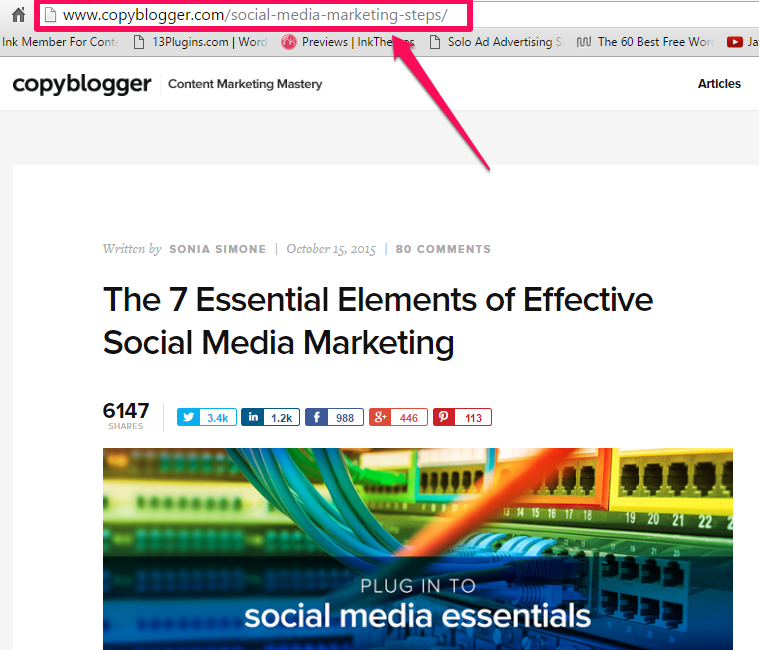
Brian Dean’s structure is what people should be doing and what I ended up doing as well. He ensures that only 2-4 words are included in any URL.
This makes the URL memorable to the user, search engine-friendly, and easy to type. Copyblogger does the same thing:
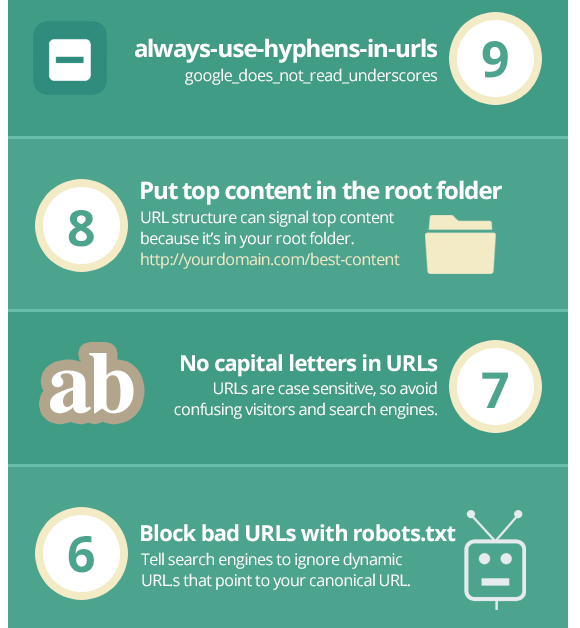
You can learn more about optimizing your page URLs from this infographic:
In Conclusion:
There are many more optimizations that you can use to improve your website. But as a small business these are things you can do for free to help you improve your webpage. Here’s to see a higher ranking from you at google.com. CHEERS!
Are there anymore SEO techniques that are easy for small businesses to implement? Comment below!
 Marketing in the Digital Age
Great article! As a marketer myself, I always use these SEO techniques! Great to see other marketers doing the same! I think another easy thing for marketers to do is to have a theme that is easy to relate with customers to! With better themes, there would be better comments and leading to better rankings! Let me know what you think!
LikeLiked by 1 person
Hi Amelia! Great to have a fellow marketer here! Yes, I agree with having a theme! Great insights!
LikeLike
Wonderful article! With a constantly complicated and diverse changing SEO System, it’s hard to keep track of what to do as a basic measure. Thanks for telling us what to keep a look out for!
LikeLiked by 1 person
Thank you, Henry! I’ll continue to leave more articles to keep you guys informed! Thank you!
LikeLike
Hey Marvin. I feel that your analysis was really on point. Great job! There are a multitude of things in SEO to take note of, however ultimately, more than just focusing on SEO, focusing on the customer would be better. After all, that’s what SEO intends to do anyway, boost ranking by fulfilling needs of the customer. Why would you suggest that it’s important to only look at SEO? Thank you
LikeLiked by 1 person
Hi Esther! Yes, we are on the same page, I do agree that focusing on customer needs is important! However, without SEO you won’t be able to attain new customers to fulfil their needs! Therefore, although I agree with you up to a certain extent, this article is meant for those people that are looking to boost their SEO! I did a post about fulfilling customer needs in other articles which you are more than welcome to read! Thank you!
LikeLike
Hey Marvin! Great post! I agree in using Big data to search for trends that other people are looking for! So many people neglect the free information given on the web when doing marketing. Keep up the good work!
LikeLike
Hi Marcus! Thank you for commenting again! Big Data is such a useful tool for companies to use! Especially, the free ones like google analytics!
LikeLike
Great article! there are all things that we can constantly work towards, and optimising page URLs is important for sure.
LikeLike
Hi Fabian! Yes, Optimising URLs to make it easier for search engine spiders to look out for is really important to boosting SEO! Thank you for your comment!
LikeLike